The Financial Accounting Standards Board on Wednesday decided against pursuing research and a potential update to accounting standards that govern the preparation of personal financial statements.
The vote came less than two years after a professor of accounting at Brooklyn College of the City University of New York penned an agenda request asking the FASB to revamp the rules, citing ambiguities and disagreements over their interpretation that were showcased in a civil fraud trial that President Donald Trump faced after he was sued by New York State Attorney General Letitia James in 2022.
Last year, the accounting standard-setter also sought feedback on the matter (formally known as Topic 274) from stakeholders such as investors and others that prepare and use financial statements. The move was part of a broader outreach initiative to help the board decide what new projects to put on its agenda and tackle.
A staff member Wednesday told the board that the current guidance on the preparation and presentation of financial statements for individuals calls for assets to be measured at estimated current values and liabilities to be measured at estimated current amounts. Some stakeholders did suggest that the FASB consider requiring assets in personal financial statements to be measured at fair value and address disclosure requirements, according to a Jan. 3, 2025 FASB document detailing the agenda consultation. But the staff member said they questioned the “pervasiveness” of the concerns and need to address the topic, noting that most stakeholders saw the topic as a low priority.
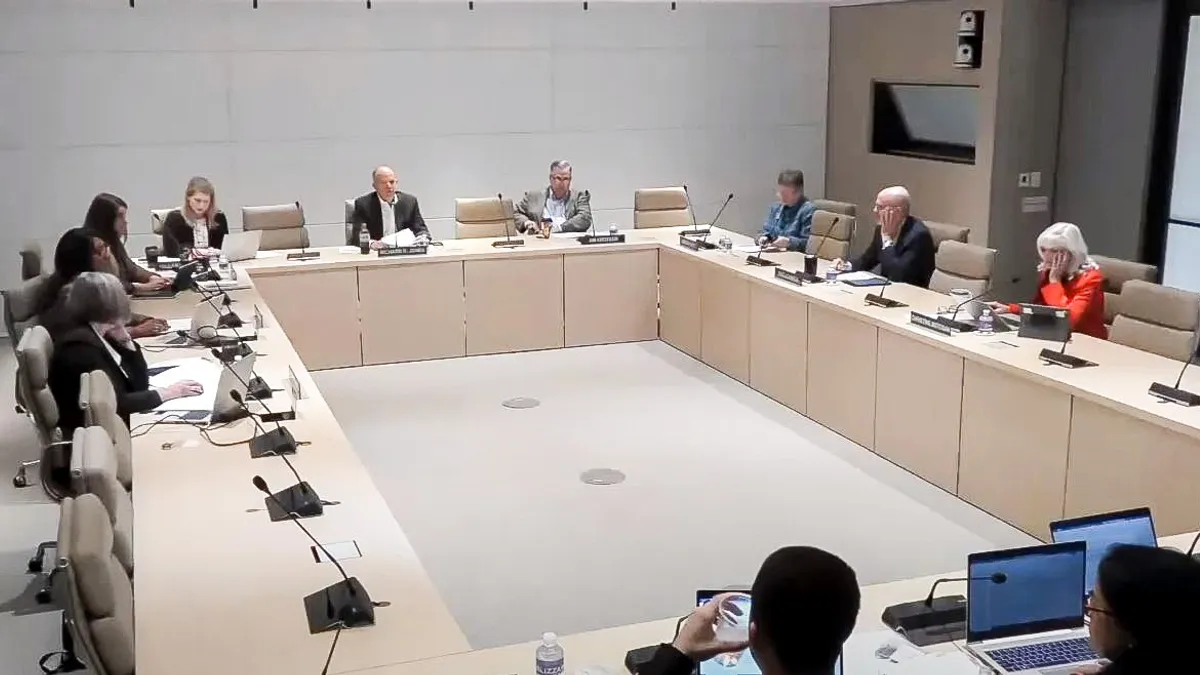
Joyce T. Joseph, a FASB member, was among the board members who voted against taking up the issue, noting that solutions already exist in the guidance. “I do appreciate the stakeholders’ view that fair value accounting could potentially be more decision useful but of course the estimated current value approach is certainly more practical; it’s less complex and more cost effective given the potential use of the personal financial statements,” Joseph said during the meeting.
FASB Chair Richard Jones also cast a vote against taking up the issue, noting the guidance came from the American Institute of Certified Public Accountants. “We simply codified it,” Jones said during the meeting. At some point in the future he suggested the FASB should consider whether to ask the AICPA to take it on. “Then they would resolve some of the matters,” he said. “But that’s a discussion for another day.”
Daniel Tinkelman, the Brooklyn College professor who asked the FASB to address personal financial statements, said he was disappointed by the decision. He also questioned the FASB’s determination that the matter was not “pervasive,” which is a key element that needs to be in place for the board to take up matters.
“Clearly there has been a demand for these [personal financial] statements by lenders for a long time,” Tinkelman said in an interview after the vote Wednesday. “I was disappointed that they did not take the opportunity to clean it up.”
In his 2024 letter outlining the need for changes, Tinkelman noted that Trump himself has highlighted the problems of the current GAAP guidance.
During the trial Trump testified that due to how flexible GAAP was, he considered his personal financial statements to be “worthless,” with expert witnesses also saying GAAP allowed values to differ by orders of magnitude, Tinkelman pointed out in the letter. “I respectfully suggest that the FASB consider whether the accounting in this area needs to be revised and clarified,” the letter stated.
On Wednesday Tinkleman noted that nobody mentioned Trump during the FASB meeting even though his agenda request focused on the case. “I think when the president of the Untied States says his personal financial statements are ‘worthless,’ there is a need to look into the situation,” Tinkelman said in an email. “And when expert witnesses can’t agree on the rules in a case involving the president, clarification is in order.”