As companies experiment with new types of pricing models, Vista Global CFO Charlotte Colhoun is sticking with her aviation company’s subscription approach.
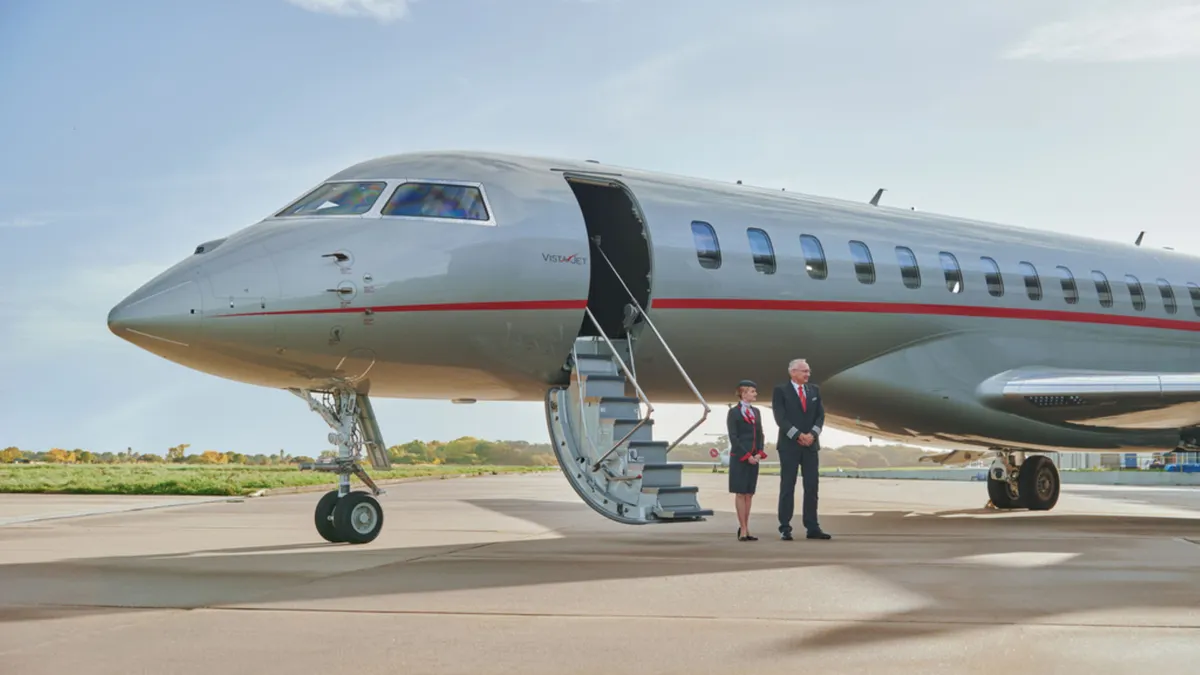
The company, founded in 2004 by Swiss businessman Thomas Flohr, has a fleet of about 200 airplanes flown by its own pilots and flight attendants that transport its clients — company executives and wealthy individuals —where they need to go.
The privately-held Vista, which is headquartered in Dubai with operational hubs in Malta and Columbus,Ohio, has sought to fill a gap in the high-end aviation market, Colhoun said.
By offering three to five year contracts to clients, Colhoun said it offers customers predictability that chartered one-off single jets don't give. The contract also enabling companies to treat the cost of plane access as an operating expense, versus a steep add to the capital expenditures budget that buying a company jet can present.
“Do you want to have a corporate jet on your balance sheet? Perhaps not, and what we offer is ultimately asset light,” Colhoun told CFO Dive in a recent interview.

At the same time, Vista’s business model also benefits its bottom line and gives it a competitive edge. For example,“a pretty decent supermodel aircraft” can cost as much as $80 million: a steep price for a company jet, which often flies less than 250 hours a year, she said.
By comparison, she said Vista’s fleet flies more than 1,000 hours a year which means the company spreads its capital costs out over a much greater period of time.
“You’re four times more efficient in terms of spreading your capital costs on a per hour basis,” she said. “From a client proposition as well we can also be really competitive…we’re able to pass through that efficiency factor to our clients to enable us to kind of compete effectively.”
The price clients pay to fly, which is reflected in contracts that generally have terms of three to five years, varies greatly, Colhoun said. But the company said the hourly cost of flying Vista roughly ranges from about $12,000 to $25,000.
Pricing of the contract depends on such variables as aircraft type, where client companies need to go globally — Vista flies to over 200 countries and territories — and whether the client’s needs are predictable.
For example, Colhoun said a race car driver on the Formula One circuit would know their schedule a year in advance and Vista can give such a client a more competitive rate. But those with travel that is more erratic might pay more.
As for volatility in fuel costs, she said the company adjusts pricing annually for inflation and allows Vista to make monthly adjustments for fuel costs that are stipulated in the contracts.
“We have built in appropriate protections,” she said, noting that the core structure of its contracts have been largely unchanged through the years and being transparent with clients has avoided challenges. “I have to say…particularly during periods of volatility is where our business model proves out,” she said.
Colhoun has been group CFO of the privately held Vista Global for over three years, a post she took after serving as the company’s chief investment officer for about one year, according to her LinkedIn profile. She’s also a chartered accountant, who earlier in her career logged eight years with PricewaterhouseCoopers.
Becoming a CFO was not exactly a career goal, nor did she anticipate being in the aviation sector. But she enjoys the position, including her role in developing a program for internally developing finance talent that provides young professionals with experience in the company’s different departments.
Serving as a finance chief has “been a whole new challenge, a whole new set of skills to develop and opportunities to explore but that’s probably what I love most about Vista,” she said. “You’re frequently in uncharted territory because we don’t fit directly into one specific kind of sector or industry.”
Editor's note: The story was updated to include additional pricing details.