Dive Brief:
- Growth in U.S. business activity in March slowed to an 11-month low as the Iran war pushed up prices and restrained new orders, S&P Global said Tuesday.
- Service sector activity rose at the weakest pace in nearly a year, and businesses responded to higher input costs and a spike in energy prices by raising average selling prices at the fastest rate since August 2022, S&P Global said. Manufacturers reported gains in new orders and output as tariff worries eased.
- The S&P Global flash March composite index fell 0.5 point to 51.4, remaining above the 50 threshold marking expansion. The decline signals “an unwelcome combination of slower growth and rising inflation following the outbreak of war in the Middle East,” Chris Williamson, chief business economist at S&P Global Market Intelligence, said in a statement in the report.
Dive Insight:
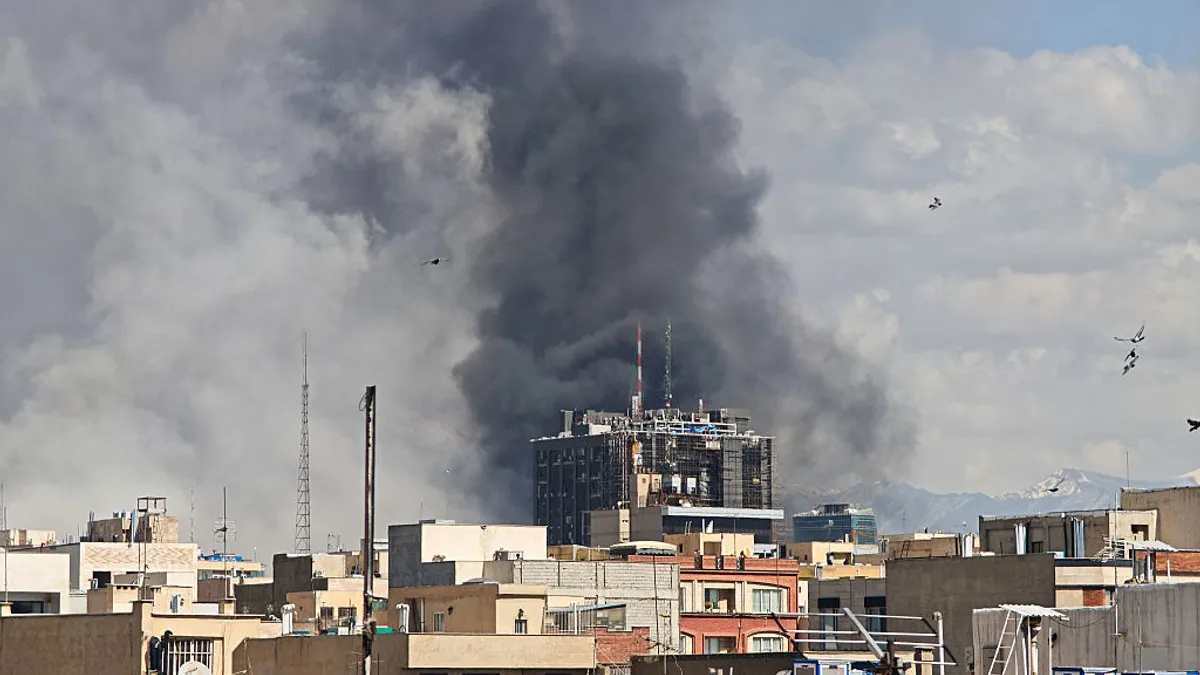
The Iran war, although flaring for less than a month, has already jarred businesses across many sectors of the economy, Williamson said.
“Travel, transport and tourism related issues are compounded by financial market jitters and affordability constraints, notably including concern over the impact of higher interest rates, surging energy prices and supply chain delays,” he said.
“Companies are reporting a hit to demand from the additional uncertainty and cost of living impact generated by the conflict,” Williamson said in a statement.
Futures for Brent crude oil, the global benchmark, have rocketed during the past month by about 50%, from $67 per barrel to $100 per barrel.
Also, the average price for a gallon of regular gasoline has surged during the same period by 35%, according to AAA.
“The conflict with Iran that erupted in late February has caused the largest disruption to global oil supplies in history,” Mark Zandi, chief economist at Moody’s Analytics, said Tuesday in a LinkedIn post.
“With prospects for a quick resolution of the conflict fading, global financial markets are under mounting pressure, and recession risks are uncomfortably high and rising,” he said.
“Corporate bond spreads are widening as concerns grow about what events mean for businesses' ability to manage their liabilities,” Zandi said. “Lower-rated borrowers are finding it increasingly difficult to issue new debt.”
A sustained blockade of oil shipments through the Strait of Hormuz would slow the U.S. economy at an annualized rate of 2.9 percentage points during the second quarter, the Federal Reserve Bank of Dallas said in a report.
If oil prices do not decline within the next two months, the U.S. will suffer “significant economic damage” from higher inflation and a slowdown in growth, Zandi said.
The economy during the first quarter will likely expand at an annualized rate of just 1.3%, Williamson said, citing the S&P Global data.
Consumer price inflation may accelerate back to about 4%, as indicated by the S&P Global data, “hinting at the growing risk of the U.S. moving into an environment of stagflation,” he said.
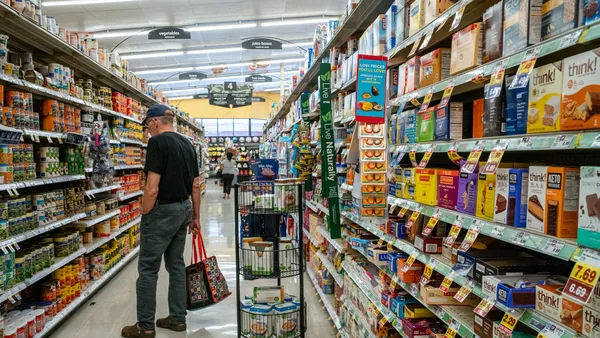
Consumer spending — and confidence — would plummet during a sustained rise in energy prices, Zandi said. Consumers fuel nearly 70% of economic growth.
“The biggest blow is to consumers’ purchasing power,” he said. “If they need to spend more of their wages on filling their gas tank and paying their utility bills, they have less to spend on everything else.”