Dive Brief:
- Consumer confidence rose in March even as the Iran war triggered a surge in gas prices, with a brighter view of current business and labor market conditions outweighing gloomy expectations for the economy in six months, the Conference Board said Tuesday.
- The Conference Board Consumer Confidence Index increased 0.8 point to 91.8 although spiking oil prices and tariffs pushed up short-term expectations for inflation to the highest level since August 2025.
- “Consumers’ write-in responses on factors affecting the economy continued to skew towards pessimism,” Conference Board Chief Economist Dana Peterson said in a statement. “Comments about prices and the cost of goods suggest that the cost of living remained at the top of consumers’ minds.”
Dive Insight:
The gain in the confidence gauge clashed with results from a University of Michigan survey released Friday showing that household sentiment in March slumped 6% to the lowest level this year as the Iran war pushed up gas prices and slammed stock markets.
Yet the surveys aligned in measuring anxiety about short-term inflation, with the university survey revealing that consumer expectations for inflation in 12 months rose to 3.8% from 3.4% in February in the biggest one-month gain since April 2025.
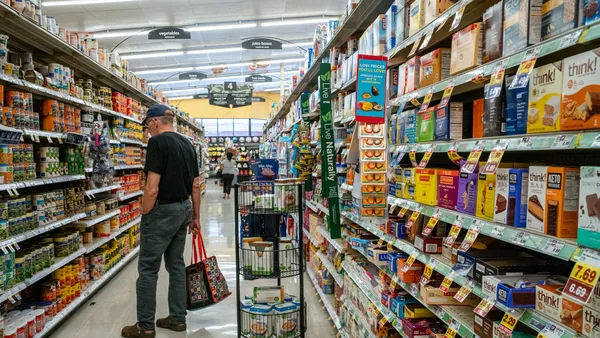
The Conference Board results “show the growing concern about rising prices, especially gas prices, and a hesitancy to make big purchases with the war in Iran and so much uncertainty hanging over everyday life,” Navy Federal Credit Union Chief Economist Heather Long said.
“The strain is starting to show, especially as gas hits $4 a gallon nationwide,” Long said in a note. “It’s almost certainly going to be a muted second quarter for spending and gross domestic product growth as the worst of the inflation shock hits consumers.”
Consumers also view the labor market with anxiety, with the share of households saying job offers are scarce rising to 21.5% — the highest level in more than five years — from 21% in February, the Conference Board said.
At the same time, the proportion of consumers who say jobs are plentiful rose to 27.3%, the Conference Board said. The difference between consumers with favorable and unfavorable views of job availability was little changed compared with February.
A Labor Department report on job openings affirmed the pessimistic outlook, showing that job openings declined in February and hiring slowed to 3.1%, the lowest level since the early months of the pandemic in April 2020.
“It’s a hiring recession,” Long said. “The only saving grace is layoffs and quits also remain at low levels.”
“As companies face cost pressures this spring from higher energy prices and ongoing AI investment demands, it would not take much to see more firms turn to layoffs to lower their costs,” she said.
Job openings fell to 6.9 million in February from 7.2 million in January, the Bureau of Labor Statistics said Tuesday.