Dive Brief:
- Procter & Gamble expects the Middle East conflict to have a roughly $150 million after-tax impact on its fiscal 2026 earnings, CFO Andre Schulten said Friday, as higher energy costs and supply-chain pressures weigh on the company.
- Schulten cited a “combination of commodity-linked cost inflation, feedstock exposures, and logistics disruptions” tied to the conflict.
- “Almost all of these increased costs will be in the fiscal fourth quarter,” he said during the company’s fiscal year 2026 third quarter earnings call. “Our teams are doing a tremendous job to protect supply continuity and to minimize cost impacts.”
Dive Insight:
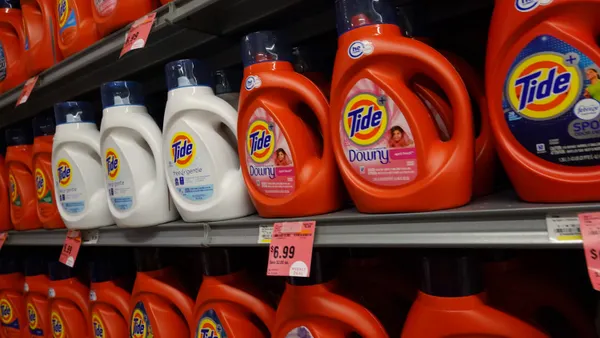
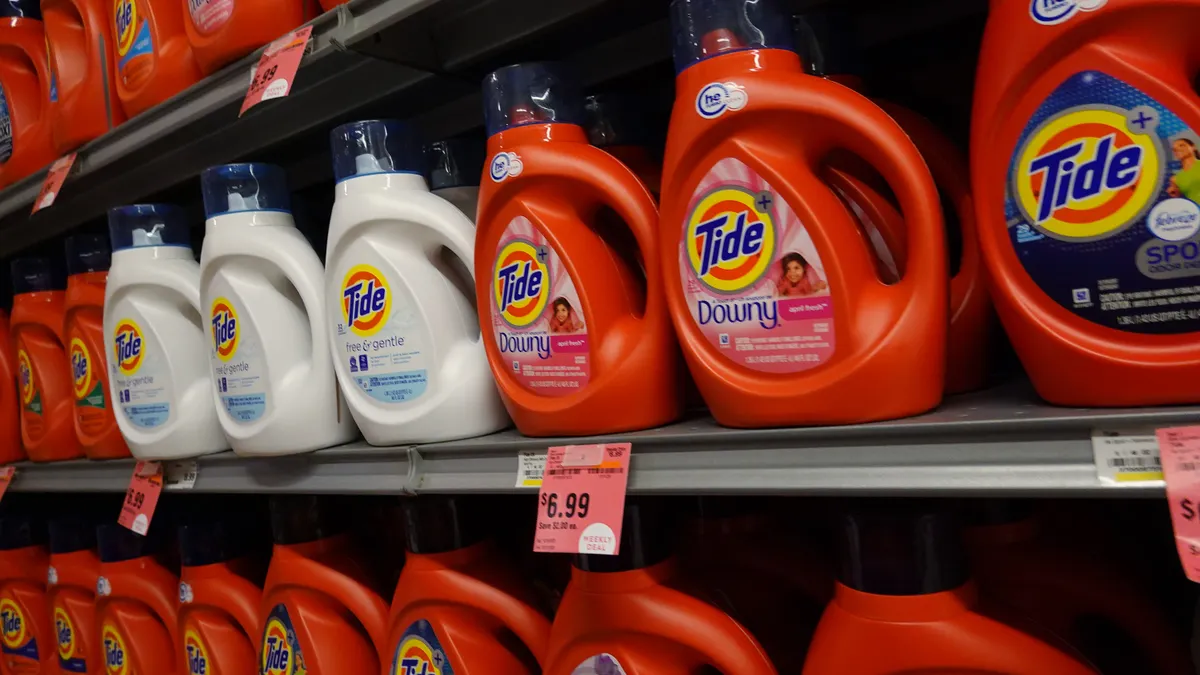
The news from Procter & Gamble, the Cincinnati-based maker of consumer products such as Tide laundry detergent and Crest toothpaste, comes as S&P Global survey results released Thursday show U.S. business activity recovered only modestly in April after near-stagnation in March following the outbreak of war in the Middle East.
Services growth remained weak as demand cooled. New orders placed at service providers rose only marginally and at the slowest rate seen over the past two years. Lost sales were linked by survey respondents to the uncertainty and disruption caused by the war among other issues, the report said.
Amid the disruption, Procter & Gamble is using tools such as data analytics to support rapid product reformulation and supplier diversification, Schulten said. He said the war’s impact extends beyond direct commodity costs to include other upstream and downstream effects on the company’s earnings.
“Regarding supply impacts, we are hopeful the full flow of materials will resume in the coming weeks,” he said. “We continue to work closely with our suppliers and contract manufacturers to identify potential short-term risks.”
Full-year guidance was maintained, though Schulten said geopolitical volatility has increased uncertainty around where results will land within the expected ranges.
He said the company would not issue fiscal 2027 guidance until July, but acknowledged investor concerns that a prolonged rise in oil prices or further supply disruptions tied to the Middle East conflict could affect costs next year.
Brent crude at around $100 a barrel would raise annual costs by about $1 billion after tax compared with pre-conflict levels of roughly $65 a barrel, he said.
The company said Thursday that it generated net sales of $21.2 billion during its third quarter ended March 31, a year-over-year increase of 7 percent.
Meanwhile, Schulten said P&G is estimating about $150 million after tax in potential tariff refunds from the Trump administration, though he said it remains unclear how much of that amount the company will ultimately recover.
“We are following the process the U.S. administration is beginning to lay out,” Schulten said.